
Roll-to-Roll LED Strip FPCB
The Long-Board Alternative to Traditional Sheet-Based FPCB.
Traditional 0.5m sheet FPCB is supplied as pieces. LED Strip manufacturing needs continuity. NWSIRY roll-to-roll physical-cutting FPCB helps reduce the gap between PCB supply and LED Strip production.
2015
Founded
9
Roll-to-roll machines
10M m
Monthly capacity up to
5-7 days
Regular lead time

Core difference
From short-board supply to long-board manufacturing format.
If You Currently Buy 0.5m FPCB
Your production may be solving a board-format problem every day.
Many LED Strip factories start with traditional 0.5m electroplated or sheet-based FPCB. It looks familiar and easy to buy, but the final product is not a 0.5m product. It is a continuous LED Strip roll.
Short pieces must become a long strip
Each short section needs to be handled, connected, checked, and moved into the next process.
More connection points mean more risk
Every additional transition can create soldering risk, repair work, or inconsistent electrical performance.
More manual work means less control
Manual joining, repeated inspection, and stop-start handling make output harder to stabilize.
Continuous processes need continuous material
SMT, splitting, extrusion, potting, encapsulation, and packaging work better when the board format fits the line.
Plain-English Summary
Traditional short-board FPCB is made as pieces. LED Strip production needs continuity. NWSIRY roll-to-roll FPCB reduces the gap between PCB supply and LED Strip manufacturing.
Process Difference in One Picture
The difference is not only size. It is the production route.
A beginner should not need to understand every PCB parameter first. The first decision is simple: are you building LED Strip as many short pieces, or as a continuous manufacturing flow?
Traditional Route
Sheet or 0.5m short-board FPCB
Main risk: the production team spends time turning short boards into a long manufacturing flow.
NWSIRY Route
Roll-to-roll long-board FPCB
Main benefit: the FPCB format is planned for continuous LED Strip production from the beginning.

Connection Point Risk
Fewer unnecessary transitions make the production line easier to control.
Roll-to-roll FPCB does not magically remove every production risk. Its value is practical: it reduces avoidable board-format transitions before the LED Strip becomes a finished roll.
More transitions
More places to inspect, repair, and control
- More soldering or joining work
- More manual process dependence
- More stop-start handling
- More chances of connection inconsistency
Long-board logic
Fewer avoidable transitions before stable production
- FPCB format closer to finished strip format
- Better fit for continuous downstream processing
- Less repeated handling between stages
- More stable rhythm for volume production
Side-by-Side Comparison
Traditional Sheet FPCB vs NWSIRY Roll-to-Roll FPCB
This table explains the difference in manufacturing language, not catalog language. The focus is what changes on your LED Strip production line.
| Production Question | Traditional 0.5m Sheet / Short-Board FPCB | NWSIRY Roll-to-Roll Long-Board FPCB | Practical Customer Benefit |
|---|---|---|---|
| How is the board supplied? | Usually as panels, sheets, or short pieces that must be turned into a long strip process. | As long-board roll-format FPCB planned for LED Strip continuity. | The board format better matches the final product format. |
| Where does extra work appear? | Joining, soldering, inspection, repair, and repeated manual handling between short sections. | Long-board logic reduces unnecessary short-board transitions before downstream processing. | Less avoidable labor and fewer connection-related risks. |
| How does it affect SMT? | Short sections can interrupt placement rhythm and increase handling. | Long-board format can support repeated solder paste printing, placement, and reflow planning. | Smoother production rhythm and easier scaling. |
| What about extrusion, potting, and encapsulation? | Process compatibility is often solved after the PCB is already purchased. | FPCB design is reviewed with extrusion, encapsulation, waterproofing, bending, and finished strip durability. | Fewer sample-to-production surprises. |
| How does it affect batch stability? | Batch consistency can be affected by panel handling, joining variation, and manual correction. | Roll-to-roll manufacturing supports repeated long-board output and volume planning. | More predictable repeat production. |
| What is the supplier really helping with? | Supplying a PCB that matches a drawing. | Supplying a manufacturing-format FPCB that supports LED Strip production flow. | Better decision-making before machines, samples, and volume orders. |
How NWSIRY Makes It Work
Long-board FPCB must be planned from circuit to downstream process.
The goal is not only to make a longer PCB. The goal is to make a circuit board format that can be manufactured, mounted, split, protected, tested, and repeated at scale.
Review Your FPCB Design01
Material and copper structure
Review insulation layer, copper capacity, current path, voltage, power, and thermal demand.
02
Circuit layout and cutting unit
Confirm LED density, resistor configuration, pad design, board width, and cutting length.
03
Physical cutting process
Use roll-to-roll physical cutting to form designed circuit paths for LED Strip applications.
04
Downstream compatibility check
Review fit with SMT, reflow, splitting, extrusion, potting, encapsulation, and packaging.
Where the Benefit Appears
The value appears after the FPCB leaves our factory.
Roll-to-roll FPCB is not valuable because it sounds advanced. It is valuable when it helps your production line run with fewer avoidable problems.
SMT
Supports long-board placement rhythm, solder paste printing, reflow planning, and post-SMT handling.
Splitting and cutting
Board width, pad layout, cutting unit, and process positioning can be discussed before production.
Extrusion and encapsulation
FPCB structure can be reviewed with adhesive, silicone, extrusion, potting, waterproofing, and bending requirements.
Manual labor
Fewer unnecessary short-board transitions can reduce repeated joining, checking, and repair work.
Roll length planning
Roll-format supply makes it easier to align FPCB planning with finished LED Strip roll production.
Repeat production
Manufacturing review helps reduce sample-to-production gaps in voltage drop, heat, pad stability, and process compatibility.
Good Fit
Roll-to-roll FPCB is useful when production continuity matters.
- You produce LED Strip in rolls or long continuous sections.
- You want fewer joining points, less manual handling, and fewer stop-start issues.
- Your line includes SMT, splitting, extrusion, potting, encapsulation, or waterproofing.
- You need stable repeat supply for volume LED Strip manufacturing.
Not Just a Longer PCB
The real question is whether the FPCB format supports your full production flow.
NWSIRY reviews the board together with circuit layout, copper thickness, current capacity, pad design, cutting unit, adhesive, extrusion, encapsulation, and expected production volume.
Ask for Process Review
Manufacturing Proof
A long-board promise must be backed by real production capability.
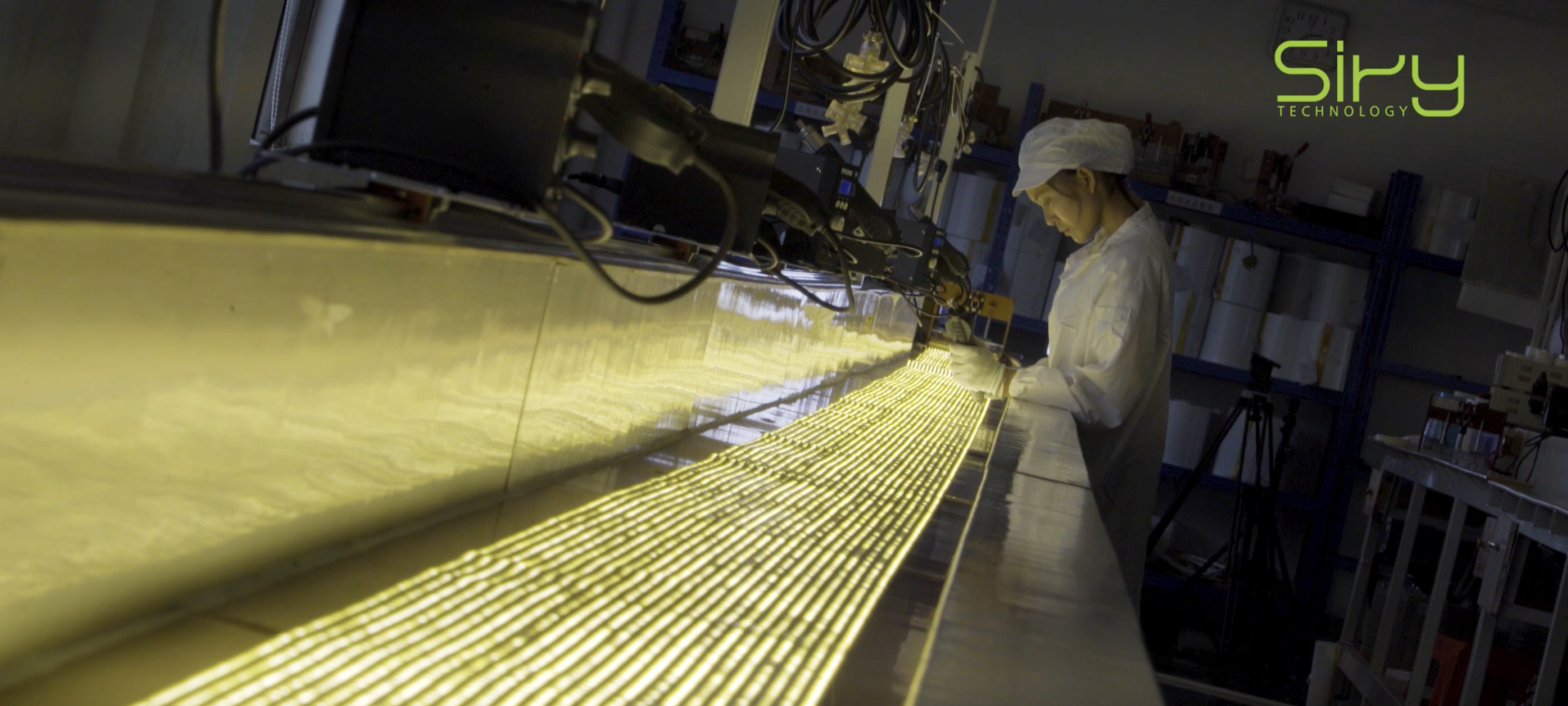
NWSIRY operates a specialized FPCB manufacturing facility in Foshan, China, supporting customized development and high-volume LED Strip circuit board production.
9
Roll-to-roll die-cutting machines
10M m
Monthly capacity up to
5-7 days
Regular production lead time after confirmation
ISO
ISO 9001:2015 quality management system
Discuss Roll-to-Roll FPCB
Send your current board format and production problem.
NWSIRY can help evaluate whether roll-to-roll long-board FPCB is suitable for your product, production process, roll length, SMT line, extrusion, encapsulation, and volume plan.
Useful information to send
- Your current FPCB format: 0.5m short board, sheet, long board, or roll format
- LED Strip voltage, width, LEDs per meter, power, cutting unit, and application
- Current production process: SMT, splitting, extrusion, potting, encapsulation, waterproofing, packaging
- Problems you want to reduce: joining points, manual handling, stop-start production, batch variation, or connection failure
- Expected monthly volume, roll length, target market, and sample requirement